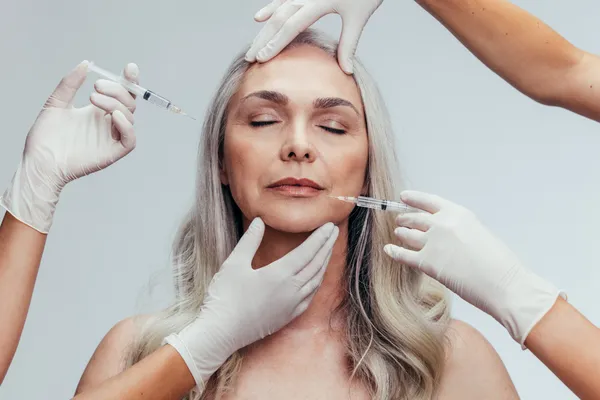
Aesthetic Treatments in Your 20s vs. 30s vs. 40s: What's Worth It at Each Stage
There's a moment in every decade when you look in the mirror and think, something's different.
At 25 it's your skin. At 35 it's the softness in places that used to feel firm. At 45 it's the face that
suddenly reads tired even when you're not. Same mirror, different questions — and different
answers.
Your 20s: The Foundation Decade
Your skin is at its collagen peak. Your metabolism is generous. Your body bounces back from
almost everything. This is not the decade to overdo it — it's the decade to build habits that pay
off for the next forty years.
What's worth it:
Facials and skin health. Regular professional facials (every 4-8 weeks) do more for your
long-term skin than any injectable in this decade. You're not fixing damage yet; you're
preventing it. A HydraFacial, chemical peel, or classic deep cleanse keeps your skin barrier
strong and glowing.
IV therapy and vitamin injections. Late nights, gym recovery, travel, hormonal cycles — your
20s are demanding, and hydration and B12 shots are the honest workhorse of energy support.
Not glamorous, genuinely effective.
"Baby Botox" — but only if you need it. If you have strong expression lines forming already
(deep 11s, forehead lines that stay when your face is relaxed), a small preventative dose can
slow their development. If you don't, wait. Botox before you need it isn't magic — it's just
spending money early.
What to skip:
Filler for volume you haven't lost yet. Aggressive treatments for aging you haven't experienced.
Anything that promises to "correct" a face that isn't broken.
Your 30s: The Maintenance Decade
Something shifts around 32-35. Recovery gets slower. Skin doesn't bounce back the way it used
to. You start noticing things — a slight hollowing under the eyes, softer jawline, texture that
didn't used to be there. This is normal, and this is when strategic treatments actually earn their
place.
What's worth it:
Injectables, done thoughtfully. Botox for lines that have started to stick around. A small
amount of filler in the cheeks or under-eyes if volume loss has started. The key word is small.
This decade is about maintenance, not transformation — the goal is looking rested, not different.
Facials and skin treatments — leveled up. Chemical peels, microneedling, and consistent
professional skincare become more important. Your skin needs more support to do what it used
to do on its own.
Body work if you want it. Your 30s are when many women start considering body contouring
or liquid BBL — often after pregnancy or a weight fluctuation. T-Shape 2 body sculpting helps
firm areas that exercise alone hasn't touched, and liquid BBL can restore shape that's shifted.
Neither is about becoming someone new; both are about coming back to yourself.
GLP-1 weight loss, if it fits. For women managing stubborn weight — especially the kind that
settled in around your midsection after 30 — medically supervised GLP-1 treatment can be
life-changing. Just make sure it's paired with protein, strength training, and a plan for your skin
(this is where T-Shape and filler often come in for GLP-1 patients).
IV therapy and vitamin injections. Not just for a hangover. IV hydration and B12 support energy, immunity, and recovery in a decade where you're likely juggling more than ever.
What to skip:
Anything that promises to reverse aging. Chasing every trend. Over-filling — this is the decade
when "just a little more" starts to add up.
Your 40s: The Investment Decade
Perimenopause changes the game. Estrogen shifts change where your body stores fat, how
your skin holds moisture, and how quickly you build (or lose) muscle. What worked in your 30s
isn't enough anymore — and that's not a failure, it's biology.
What's worth it:
Strategic injectables that address volume loss. By your 40s, real facial volume loss is
happening — cheeks flatten, temples hollow, the jawline softens. Filler placed by a skilled
injector isn't about looking younger; it's about looking rested and like yourself. Botox continues
to be a workhorse for movement-related lines.
Skin tightening — this is when it matters most. T-Shape body contouring becomes genuinely
valuable in your 40s because collagen production has slowed. Radiofrequency-based tightening
rebuilds firmness on the stomach, arms, and jawline — areas where laxity shows up first.
Medical weight loss, honestly considered. GLP-1 medications are one of the biggest
breakthroughs in perimenopausal weight management in decades. The weight that settles
around your middle after 40 is often insulin-resistance and hormone-driven — GLP-1s address
metabolic dysfunction directly. Under medical supervision, that can be a real answer.
Liquid BBL — if weight loss or aging changed your shape. Many women in their 40s
consider liquid BBL after significant weight loss (whether from a GLP-1 or otherwise), because
rapid weight loss deflates your curves along with everything else. Restoring shape without
surgery is a great option.
High-quality facials and monthly skin work. Regular professional treatments — chemical
peels, microneedling, HydraFacials — become non-negotiable for glowing, healthy skin. Home
skincare alone isn't enough anymore.
IV therapy and vitamin injections — energy and immunity. In perimenopause, hormonal
shifts affect sleep, energy, and recovery. Targeted IV drips and B12 injections can genuinely
help you feel more like yourself.
What to skip:
Doing nothing "because it's too late." Overcorrecting suddenly with dramatic treatments. Falling
for anything that promises to reverse aging in a single session.
The Thread Through Every Decade
The women who look the best in their 40s and beyond aren't the ones who did the most. They're
the ones who did the right things — consistently, in partnership with providers who told them the
truth about what they needed and what they didn't.
That's what a real consultation is for. Not to sell you a menu of treatments, but to build a plan
that fits where you actually are — and evolves with you as you go.
If you're in the Durham area, book your consultation here. We'll walk you through everything —
where you are, where you want to be, and the plan that meets you exactly where you are in
your aesthetic journey.
Disclaimer
This content is for informational purposes only and does not constitute medical advice. A
consultation with a licensed medical provider is required to determine candidacy, discuss risks,
and develop an appropriate treatment plan. Individual results may vary.
